Zburătorul
Romeo meets Slytherin

This is part of a yearlong series on the second edition of Colière, the Euclidian Non-Isochronous Rhythms card deck. Each card is a pretext to gloss over one item of Romanian mythology1, anthropomorphize it, all aimed at easier visualizing and audiating2 one particular rhythm.
Today it’s about “Zburătorul”.
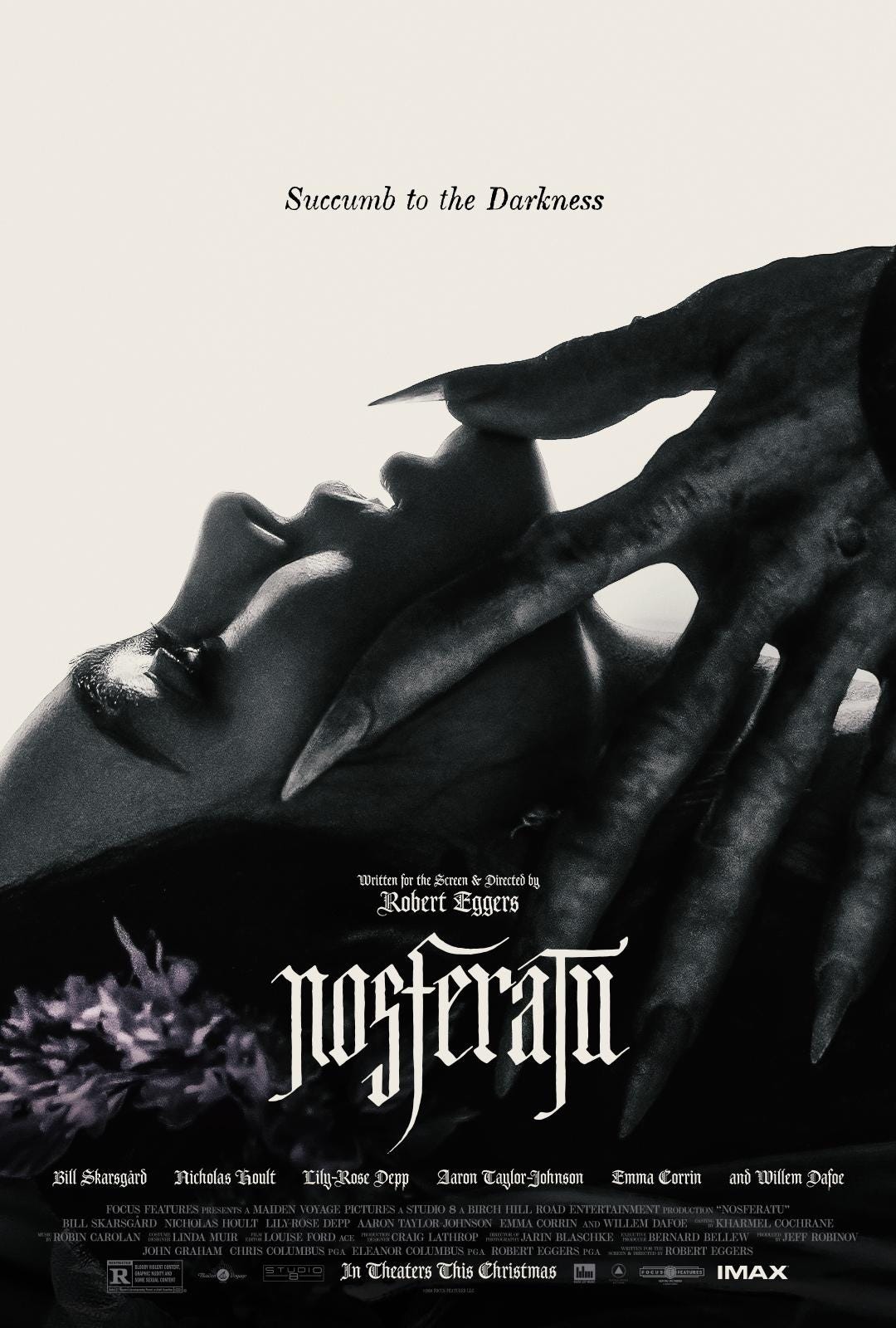
Professor, my dreams grow darker. Does evil come from within us, or from beyond?
— Ellen Hutter in Robert Eggers’ Nosferatu (2024)
He is a mythical entity tormenting women and girls. Sometimes comes as a handsome man, sometimes as a Balaur, he descends upon an unsuspecting female’s home, giving her insomnia, tiredness, anxiety, unrest, even seemingly torturing her as she would wake up with bruises on her body.
As one might expect, it is not without pleasure. This it what it was all about. Desire. Deep longing. Forbidden love. Montagues and Capulets. Twilight saga. Even if Zburătorul comes as a fire dragon, a comet, a meteor, once he is inside her home he eventually appears as her lover. He is her heart’s desire, the one her parents didn’t approve of, the one that “got away”. An old flame, as they say. He comes down the chimney, or through some cracked door or window or through the keyhole. Then he kisses, bites, hugs, you know, “loves” the poor sleeping girl. She dreams about it, trembles in her sleep, loses appetite, gets paler and thinner by the day. Usually it’s framed as he is the one that is disturbing her, not letting her get on with her life. She is the damsel in distress. Unlucky girl. It might be a little more complicated.
After the “deed” he sneaks out and sleeps during the day hidden from sunlight inside some tree. This particular tree would have to be burned by the witch attempting to heal the girl in order to get the special repellant to smear throughout her house. This condition of hers was labelled as a disease and other cures included having the quick white Călușari jumping over the lazy girl in some kind of exorcism during the Florii rituals.
“Vezi, mamă, ce mă doare, şi pieptul mi se zbate, / Mulţimi de vineţele pe sân mi se ivesc, /
Un foc s-aprinde-n mine, răcori mă iau pe spate, / Îmi ard buzele, mamă, obrajii mi se pălesc. / Ia pune mâna, mamă, pe frunte ... Ce sudoare! ...”
“See, mother, how I ache, and my chest is pounding, / Multitudes of bruises appear on my breast, / A fire ignites within me, chills take me on my back, / My lips are burning, mother, my cheeks are turning pale. / Put your hand, mother, on my forehead... What a sweat! ...”
— Ion Heliade Rădulescu , Zburătorul (1844)
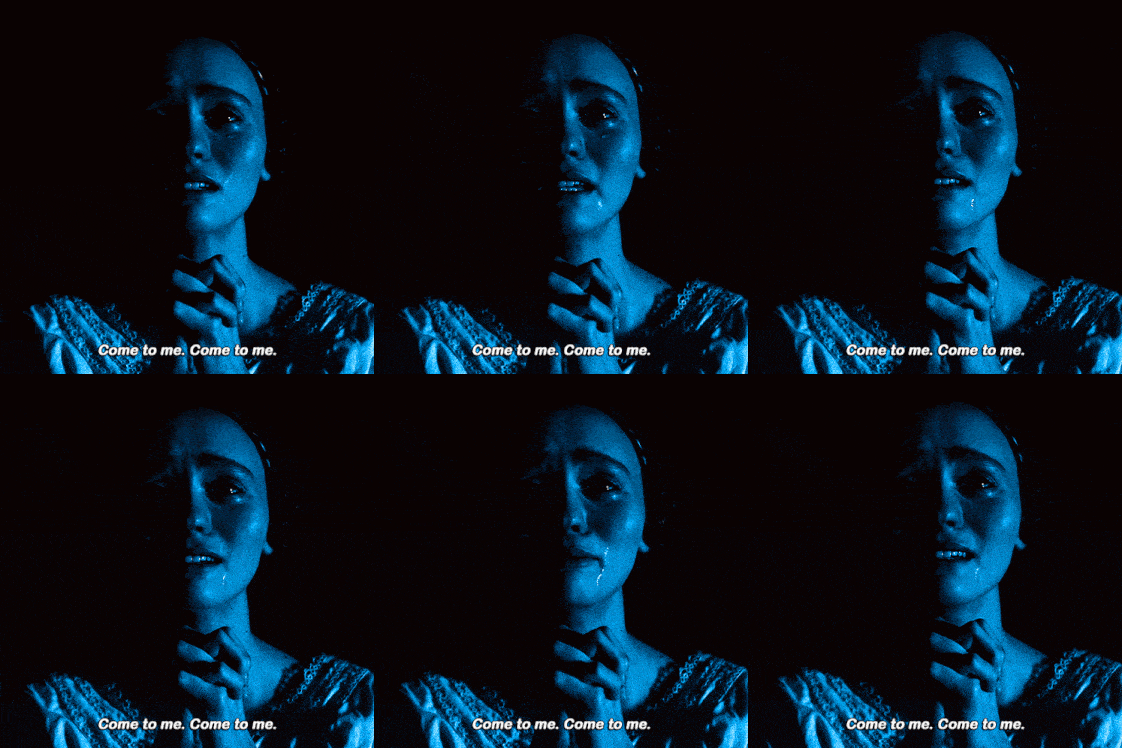
The symptoms were there for everybody to notice. She had hallucinations, shivering and trembling, sad or not feeling well, wandering around gesturing lovingly at the shadow of some trees. Some Swedish girls were claiming they were actually running low on serotonin. Science!
Zburătorul, is translated as “the flying one”, fly guy3 if you like. He is associated with Eminescu’s greatest hit Luceafărul, the Evening Star apparently, not the Morning Star as I mistakenly labeled it in my Coliere V1, but we will get to it on May 31 when it will come the time for E(3,14)4. It is confusing, but it was about Venus all along.
He is an incubus, but a little more folkish, and less pretentious. A Latin name makes everything sound posh. In our instance he is just a guy. Sneaky and quite annoying, yes, but still just a guy. Maybe as handsome as this artificial guy here.


In Coliere V1, this is ARA (Altar), E(4,7) [x . x . x . x]. What some people build in order to worship somebody else. A distant and often indifferent one, one that can bring much pleasure yet more often than not it strikes with illness and disease. It is a receiving card, feminine, because you guessed it, it is about her, not him. It always was.
Hope Sandoval spoke of this.
I wanna hold the hand inside you
I wanna take the breath that’s true
I look to you and I see nothing
I look to you to see the truth
You live your life, you go in shadows
You’ll come apart and you’ll go blind
Some kind of night into your darkness
Colors your eyes with what’s not there
— “Fade Into You” by Mazzy Star, (1993)
Once again squeezing the juice from Ion Ghinoiu’s Dictionary of Romanian Mythology
I’ll maybe add the voiceover/artistic sound performance later. I’ll maybe add them retroactively to older posts too. As I just did for Sorbul. aka “Suck and then give back / More than you sucked”
A good example:

With a totally different identity, she will be a girl. A fly girl this time around.